Baby Boy Digital Paper Backgrounds for Modern Designs
When I first curated the Baby Boy Digital Paper Backgrounds collection, I wanted to solve a specific problem I kept seeing in the industry: the lack of sophisticated, high-resolution textures for newborn themes. Too often, designers are stuck with flat, generic pastels that look cheap on high-DPI screens. This collection was crafted to bridge the gap between traditional, sentimental motifs and the crisp demands of modern web design and print production. We moved away from standard clip art and focused on creating a library that functions as a professional design asset, featuring textures that mimic the depth of physical stationery.
The Intersection of Classic Texture and Digital Precision
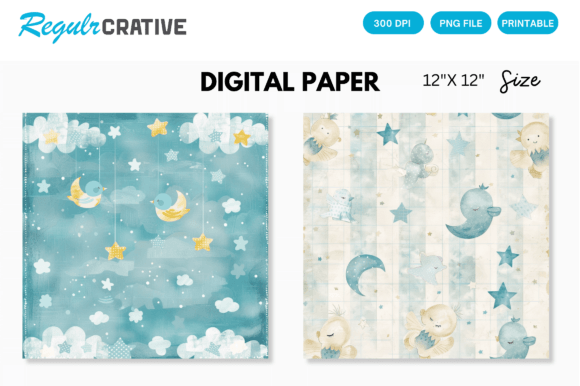
The defining characteristic of these backgrounds is their dual nature. Visually, they embrace a "vintage nursery" aesthetic, drawing heavily on classic floral patterns and soft, tactile textures. However, the execution is entirely modern. Each file is engineered at 300 DPI with dimensions of 12x12 inches (3600x3600 pixels). In the world of premium font and asset creation, resolution is everything. If you have ever tried to print a low-resolution digital background, you know the result is a pixelated, blurry mess that ruins the perceived value of your final product. By providing PNG files at this specific scale, we ensure that whether you are designing a small business card or a large-format poster, the integrity of the image remains flawless.
It is important to view these papers not just as "backgrounds," but as foundational layers for visual hierarchy. In editorial design, for instance, a busy floral texture can overwhelm body text. However, these patterns are designed with enough negative space to remain readable when used behind lighter opacity elements or solid color blocks. They offer a warmth that solid colors cannot, adding a layer of brand perception that says, "We care about details." For entrepreneurs building a brand identity around motherhood, childcare, or family services, these textures provide an immediate visual shorthand for comfort and quality.
Strategic Applications for Creative Professionals
Understanding where and how to deploy these assets is key to maximizing their value. As a designer or content creator, you need to think beyond simple scrapbooking. While they are perfect for physical craft projects, their utility in digital spaces is where they truly shine. Consider the impact on social media graphics. In a feed dominated by flat colors and generic stock photos, a textured background featuring soft blues, creams, and subtle botanical elements stops the scroll. It adds a tactile quality to digital ads that invites the viewer to engage.
Here are practical ways to integrate the Baby Boy Digital Paper Backgrounds into your workflow:
- Packaging Design: If you are a small business owner selling handmade baby clothes or toys, these papers make excellent tissue paper wraps or box inserts. The high resolution ensures the print quality matches the premium nature of your product.
- Invitation Suites: For event planners and stationers, these files serve as the perfect base for baby shower or baptism invitations. They pair beautifully with script fonts or elegant serif fonts, providing a backdrop that looks expensive and custom-made.
- Digital Planners and Journals: With the rise of digital planning, creators need backgrounds that are visually distinct but not distracting. These textures offer a cozy, "analog" feel within a digital interface, enhancing the user experience.
- Website Headers: For blogs focused on parenting or web design for maternity services, using a subtle pattern as a hero image background can add depth. Just ensure you overlay it with a solid color or gradient to maintain text legibility for your headings.
One of the most common mistakes I see in graphic design is the clash of styles. You cannot pair a hyper-modern, geometric sans serif font with a rustic, hand-drawn floral pattern without creating visual dissonance. These backgrounds have a distinct personality—they are soft, organic, and timeless. Therefore, they pair best with typefaces that echo those traits. Think classic serif fonts for a sophisticated editorial look, or rounded sans serif fonts for a friendly, approachable vibe.
Technical Workflow and Licensing Essentials
Integrating new assets into your design system should be seamless. Because these files are delivered in PNG format, they are universally compatible with industry-standard software like Adobe Photoshop, Illustrator, InDesign, and Canva. When you download the collection, treat them as you would any other design asset. I recommend organizing them by colorway or pattern density so you can quickly find the right texture for a specific project mood.
From a technical standpoint, the "personality" of a background influences your entire layout. A complex floral pattern demands a simpler layout structure. If you use a busy background, your foreground elements—logos, text, and imagery—need to be bold and distinct. This is where font pairing becomes critical. You might use a heavy display font for headlines to ensure it punches through the texture, while keeping subheadings clean and minimal. This contrast creates a professional visual hierarchy that guides the viewer's eye naturally.
It is also vital to address the business side of creativity. The collection comes with a license that allows for both personal and commercial use. This is a significant advantage for freelancers and agencies. It means you can use these backgrounds in client work—whether it’s a logo design, a website, or printed marketing materials—without worrying about royalty fees for every single sale your client makes. However, the license does protect the intellectual property of the creators; you cannot resell the files themselves or share them with other designers who haven't purchased the license. Respecting these boundaries ensures that the creative economy remains sustainable for everyone involved.
Ultimately, these Baby Boy Digital Paper Backgrounds are more than just decorative elements; they are tools for storytelling. They allow you to construct a narrative around a brand or project that feels curated and intentional. By choosing high-quality textures, you signal to your audience that you value craftsmanship. Whether you are designing a nursery print, a social media campaign, or packaging design for a new product launch, these backgrounds provide the versatile, professional foundation you need to create something memorable. They are the unsung heroes of layout design, providing the stage upon which your typography and imagery perform.